
What to do when your car breaks down
A safety-first checklist for a breakdown, flat tyre, battery problem or towing request.
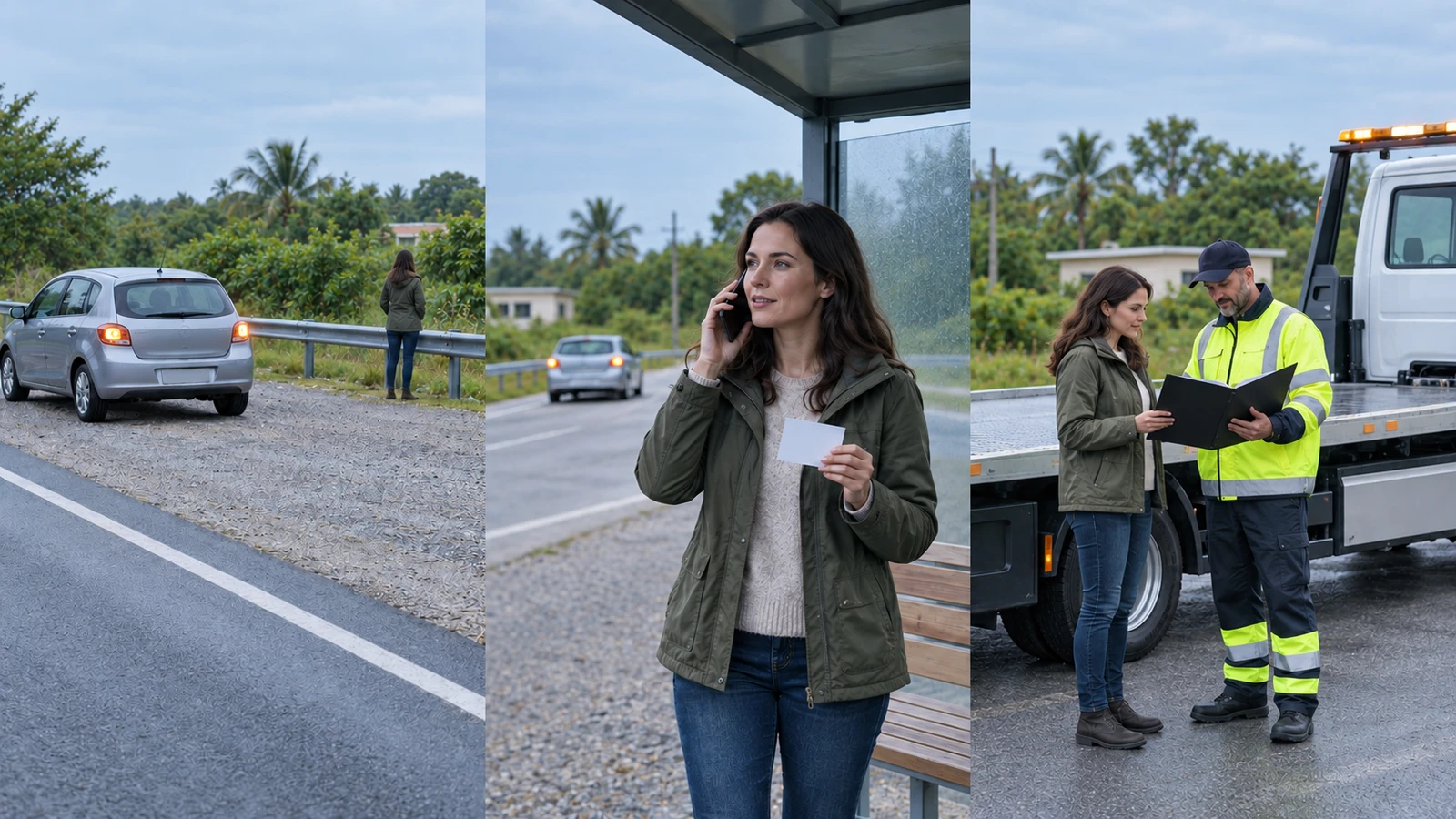
Put safety before the vehicle. If it can be moved safely, stop well away from traffic, use hazard lights and choose a firm, visible place. Keep passengers away from the road and do not attempt a tyre, battery or engine repair where traffic can reach you. If there is smoke, fire, leaking fuel, a collision injury or an immediate danger, move away and call 999.
When requesting help, share an accurate map pin, road name or landmark, the vehicle registration and model, the problem you can see, and whether the vehicle is blocking a lane. Tell the provider if the vehicle is in a basement, a gated area, a narrow road or another place that affects access.
Before recovery or towing starts, confirm the destination, the estimated total charge, call-out, distance, toll, night, storage and after-hours charges, and how payment will be recorded. Photograph the vehicle condition from a safe place and keep the receipt, job reference and provider contact.
Do not give a stranger your keys, registration documents, banking information or one-time codes. At handover, check that the destination and vehicle details match the agreed arrangement. This checklist helps you prepare a safe request; follow emergency responders when there is an immediate risk.
If you cannot confirm that a roadside repair is safe, arrange recovery instead of taking risks beside traffic. Send a trusted contact your location and keep the provider's arrival details in writing. After towing, check the vehicle destination, keys, mileage and condition against the job record before leaving the workshop or storage point.